Human–AI Interaction · Recursive Self-Improvement · Institutional Design

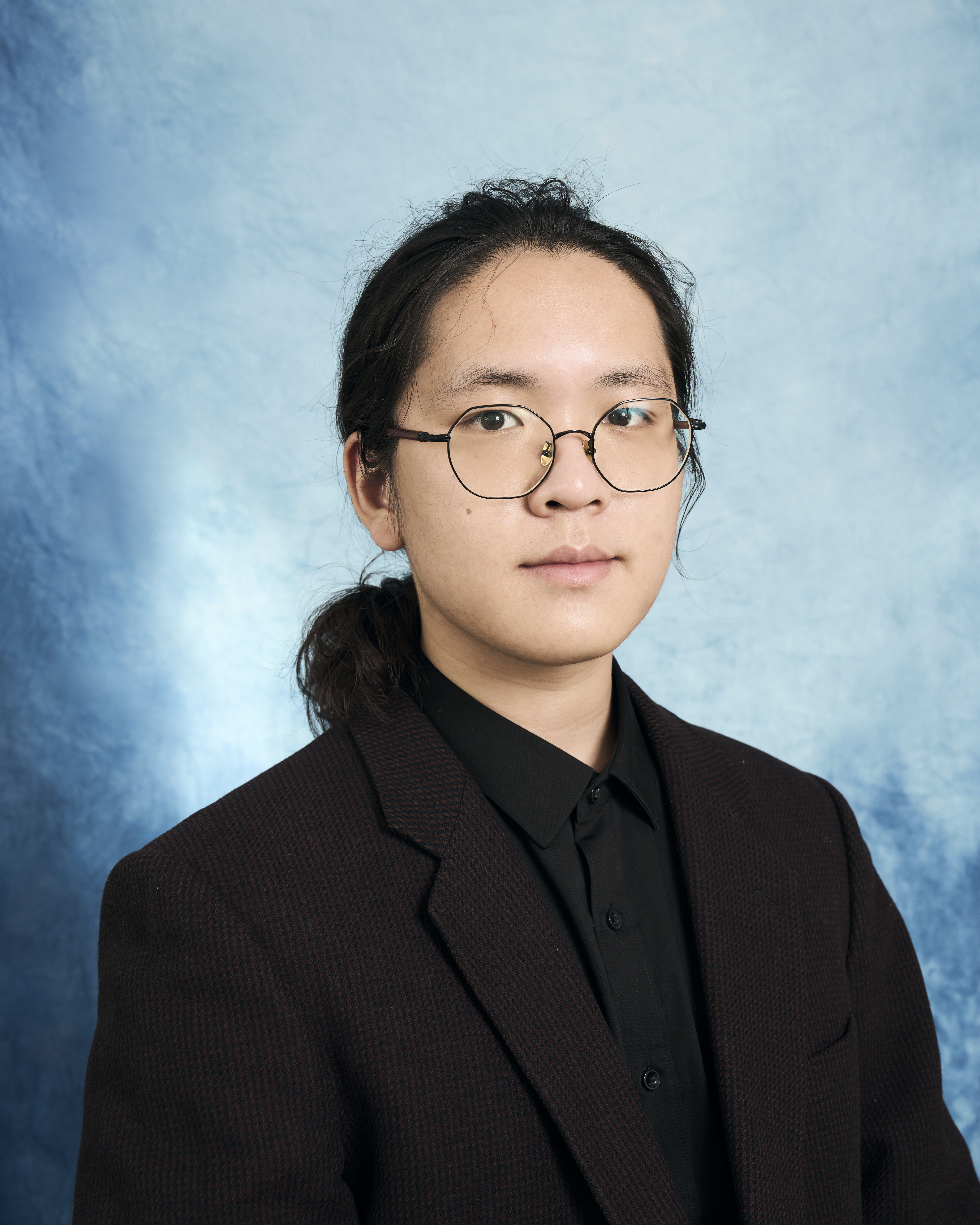
Lai Jiaqi

MSc Information Studies · Nanyang Technological University

BSc Psychology & Language Sciences · University College London

AI can already discover new mathematics on its own, yet stalls on questions of policy and society. I study that gap — and how fast, hard-to-fake validators for slow-verification domains can close it, keeping AI progress both genuine and trustworthy.

Lai Jiaqi

Research

My work spans computational social science, AI self-improvement, and governance design. One thread runs through all of it: in domains where outcomes are slow and hard to verify, how do we build the fast validators — and the institutions — that keep AI progress both genuine and trustworthy? The three directions below move from describing human–AI interaction, to the methods that let AI make real progress in such domains, to designing institutions around it.

Human–AI Interaction & Computational Modelling

Empirical and computational study of how people interact with AI systems, and how those interactions aggregate into social-scale dynamics. Spans mixed-methods behavioural experiments (N = 86) on autonomy, trust, and delegation; NLP analysis of cross-cultural AI sentiment; and dynamical-systems modelling of how AI controversies propagate through opinion networks.

Recursive Self-Improvement & Domain Sharpening

When can AI improve itself through genuine discovery rather than mere self-elicitation? Auto-research and recursive self-improvement deliver real gains only where fast, hard-to-fake validators exist (mathematics, code). I study how to sharpen slow-validation domains by building fast surrogate validators — agent-based modelling, mathematical and dynamical-systems modelling, structural invariants — which makes bold hypothesis generation safe again and yields the negative examples needed to train auto-research taste.

Institutional Design for Autonomous AI

Turning sharpened validators into governance: designing accountable institutions for AI-enabled public resource allocation, grounded in mechanism design, Bayesian Truth Serum, and agent-based stress-testing. Targets two pathologies of autonomous delegation — moral responsibility diffusion and delegation blindspots.

Publications

Reverse chronological order. Full CV →

2025 Virtual Reality
JCR Q1

Comparison of hand tracking-based and controller-based interaction in a consumer virtual reality game

Steed, A., & Lai, J.

A controlled VR study comparing two interaction modalities — hand tracking versus traditional controllers — in a consumer game setting. Contributes empirical evidence on how input modality shapes user behaviour, presence, and performance.

Virtual Reality Human-Computer Interaction Interaction Modalities
2026 Working Paper
In prep. · Physical Review E

Stability of AI Governance Systems: A Coupled Dynamics Model of Public Trust and Social Disruptions

Lai, J., Hou, L., & Huang, W.

Derives closed-form spectral stability conditions (ρ(J2n) < 1) for a bidirectionally coupled Hawkes–Friedkin–Johnsen trust dynamics system. Demonstrates irreversible governance collapse under echo-chamber topologies and identifies tipping-point thresholds for institutional intervention.

AI Governance Dynamical Systems Public Trust Hawkes Process
2024 Working Paper
ACM CHI / CHB

Can freedom lead to trust & satisfy? How user autonomy influences trust perception in LLM-powered conversational agents

Lai, J. & Dechant, M.

A mixed-methods study (N = 86) challenging standard assumptions about user autonomy and trust in human–AI interaction. Employs formal SEM/CFA latent-variable modelling to link AI system design choices to delegation and adoption outcomes.

Human–AI Interaction User Autonomy Trust SEM/CFA
2024 MSc Project
Full Marks

The Disinformation Campaigns about the Israel-Palestine Conflict in the Digital Era

Lai, J., Wang, T., & Li, X.

Analyses the systemic impact of generative AI on state-sponsored computational propaganda through the lens of Strategic Narrative Warfare theory. Awarded full marks as MSc Critical Inquiry Project; full paper available as a writing sample below.

Disinformation Generative AI Strategic Narrative

Experience

Research, policy, and industry roles across Singapore, the UK, and China. Full CV →

Research & Policy

Apr. 2026 – present Singapore

Research Assistant · AI Singapore

under Dr. William Tjhi

  • Designed and implemented a human-governed extension layer for an existing policy-simulation ABM: mechanism-scope gaps trigger LLM-authored candidate modules within a bounded declarative interface.
  • Built an auditable staged workflow — provenance labels, deterministic invariant checks, paired-seed causal-direction probes, multi-seed stress tests, versioned artifacts, and explicit human activation.
  • Implemented sealed historical reconstruction and blind-forecast backtesting tracks, evaluating policy reasoning without treating similarity to historical policy as success.
Jan. 2025 – Jul. 2025 Singapore

Independent Research · NTU School of Economics

PhD-level Mathematical Economics

  • Constructed a discrete-time coupled dynamical system (Hawkes process × Friedkin–Johnsen) characterising bidirectional feedback between AI controversy events and public trust evolution.
  • Derived Jacobian-based spectral stability conditions (ρ(J2n) < 1), establishing tipping-point thresholds for trust collapse across heterogeneous network topologies.
  • Applied mechanism design (incentive-compatible elicitation) to model AI governance under asymmetric information.
Sep. 2022 – Apr. 2024 London, UK

Research Assistant · UCL Interaction Centre (UCLIC)

under Prof. Yvonne Rogers (UCLIC Director)

  • Designed and executed a mixed-methods within-subject experiment (N = 86) comparing LLM-powered and branching-dialogue agents.
  • Employed non-parametric inference and moderated linear regression, complemented by thematic analysis of open-ended responses.
  • Key finding: higher perceived autonomy did not increase trust or satisfaction — users prioritise problem-solving capability over interaction freedom.
Sep. 2024 – Apr. 2025 Singapore

Machine Learning Researcher · NTU WKWSCI

  • Analysed cross-cultural AI sentiment dynamics on Weibo and X/Twitter using NLP pipelines (VADER, NRCLex, BERTopic, PageRank).
  • Trained and benchmarked transformer and recurrent classifiers (BERT, GRU, LSTM) for cross-lingual sentiment under distribution shift.
Oct. 2023 – May. 2024 London, UK

Research Assistant · UCL Computer Science

  • Designed a controlled VR study on human behavioural responses to interaction modalities; contributed to statistical analysis and manuscript writing — published in Virtual Reality.
Oct. 2024 – Mar. 2025 Beijing, China

Policy Research Assistant · China Development Research Foundation

  • Evaluated AI deployment gaps between policy intent and real-world adoption in education and rural contexts; identified incentive misalignments shaping local governance outcomes.
  • Synthesised cross-disciplinary evidence into policy evaluation reports for senior stakeholders; defined success indicators and risk frameworks for national AI governance programmes.

Industry

Jun. 2025 – Aug. 2025 Singapore

Machine Learning Intern · Golden Gate Ventures

  • Deployed a multi-agent AI pipeline over heterogeneous data sources, reducing research turnaround.
  • Fine-tuned BERT and Qwen for domain-specific classification; first-hand exposure to production-scale AI deployment decisions.
Aug. 2025 – Jan. 2026 Singapore

Data & Sales Enablement Executive · Canopy

  • Developed a quantitative pricing model (logistic regression, GAM) through iterative coordination with operational teams; coordinated cross-departmental data integration for investor due diligence.

Projects

Open-source research code and tools.

Open Source

Matins — The Evolving Agent

A daily human–AI brainstorm loop. Each morning it proposes four research ideas (high-fit, adjacent-stretch, contrarian, and random mutation), learns your taste from how you re-rank and comment on them, and consolidates durable lessons into a versioned “taste skill.” Model-agnostic, with built-in novelty and anti-repetition guards and an optional self-evolution step gated by held-out backtests. The asset is the append-only feedback log that compounds over months.

Adaptive Agents Human-in-the-Loop LLM Tooling Python

About

I hold an MSc in Information Studies from Nanyang Technological University and a BSc in Psychology & Language Sciences from University College London. My research sits at the intersection of computational social science, mechanism design, and AI governance.

My work combines formal modelling with behavioural experiments: I build coupled dynamical systems to characterise how AI controversies erode public trust, and I run empirical studies to understand how people delegate to — and hold accountable — AI-powered agents. I am also developing governance frameworks that address moral responsibility diffusion in AI-enabled public resource allocation.

I am currently a Research Assistant at AI Singapore (under Dr. William Tjhi), building human-governed extension layers and auditable evaluation workflows for policy simulation. I have previously conducted research at the UCL Interaction Centre (under Prof. Yvonne Rogers), NTU School of Economics, and the China Development Research Foundation, with industry experience in machine learning deployment and quantitative modelling.

Skills

Formal & Quantitative Methods

Multi-Agent Systems Agent-Based Modelling Coupled Dynamical Systems Hawkes Process Mechanism Design Bayesian Truth Serum MCMC Game Theory Network & Spectral Analysis Sensitivity Analysis

AI Evaluation & Governance

Evaluator Isolation Provenance & Versioned Lineage Invariant & Multi-Seed Testing Causal-Direction Probes Historical Backtesting Human-Gated Activation

Empirical & Mixed Methods

Experimental Design Non-Parametric Inference Regression Modelling Thematic Analysis

Machine Learning & Programming

Python R SQL Git TensorFlow BERT / Qwen fine-tuning GRU / LSTM / RNN NLP (VADER, BERTopic) CrewAI / LangChain

Education

Aug. 2024 – Jul. 2025

MSc Information Studies

Nanyang Technological University

Singapore

  • Completed PhD-level Mathematical Economics by special permission — grade A (5/5).
  • Selected coursework: Machine Learning Implementation; Text & Web Mining; Disinformation & Information Professions (A, 5/5).

Sep. 2021 – Jun. 2024

BSc Psychology & Language Sciences

University College London

London, United Kingdom

  • Selected coursework: Deep Learning & Language Processing (1st Class); R & Statistical Methods (1st Class); Human–Computer Interaction.

Contact

Happy to discuss research ideas, potential collaborations, or questions about my work.